

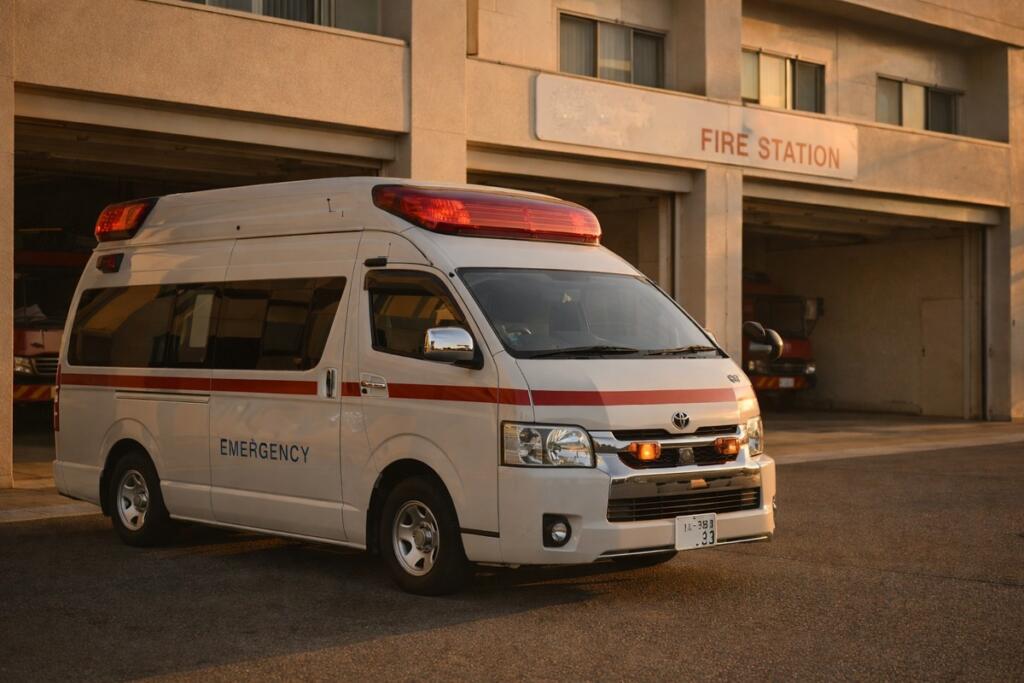
When you suddenly become ill or injured, an ambulance will rush to your aid with just a phone call. In Japan, it is commonplace to use an ambulance for free, but this is actually a very rare system even when viewed globally. In this article, we will provide an easy-to-understand explanation of the characteristics and mechanisms of Japanese ambulances, the actual situation when they are dispatched, and the recent debate over the issue of charging for ambulances.
- 1. Japan’s world-class ambulance system
- 2. Basic information about ambulances in Japan
- 3. What kind of people ride in an ambulance?
- 4. How often are ambulances dispatched?
- 5. Breakdown of symptoms of people transported to hospital by ambulance
- 6. Why ambulance fees are being discussed
- 7. Avoiding ambulance fees
- summary
1. Japan’s world-class ambulance system
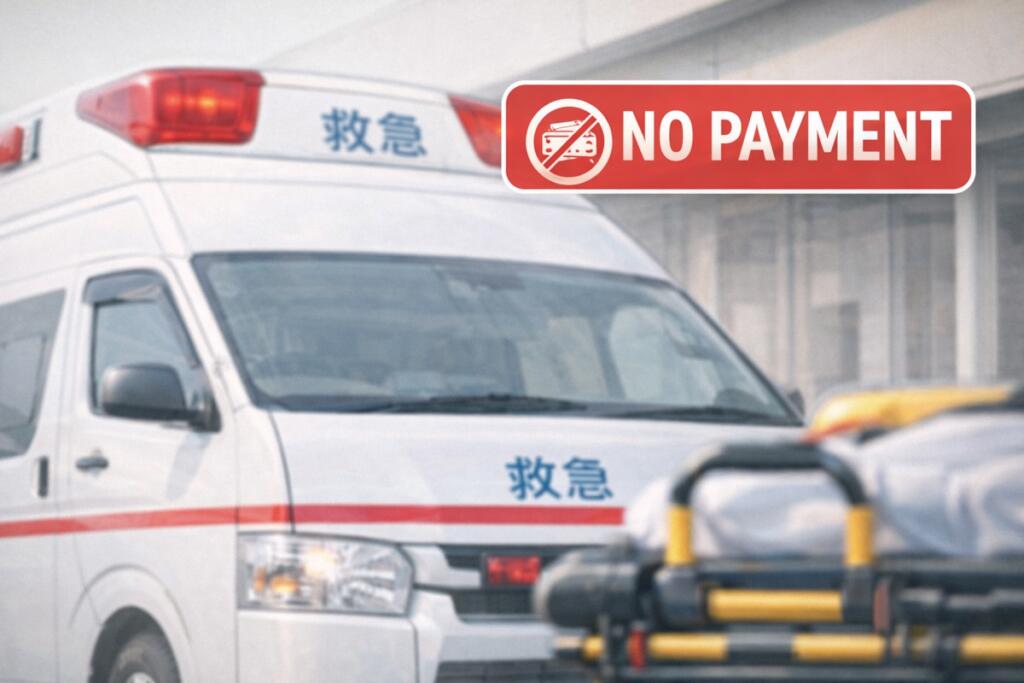
The biggest feature of Japan’s ambulance system is Anyone can use it for free, regardless of nationality or tax payment status. Not only foreigners living in Japan, but also inbound foreigners who are temporarily staying in Japan for tourism or other reasons, can call an ambulance free of charge by calling 119. This idea of ”leaving no one behind” can be said to be a particularly commendable aspect of Japan’s social system.
In which countries is ambulance service free?
Italy, the UK, and Hong Kong are some of the countries where ambulances are free or publicly funded.
- Italy (Rome)
- England (London)
And so on. Limited to certain areas, including the capital In most cases, this is the case.
Japan and Hong Kong are the only countries that maintain free tuition nationwide. This shows how unique the Japanese system is.
2. Basic information about ambulances in Japan
The cost of one ambulance dispatch in Japan is: Approximately 45,000 yen This cost is not paid by users, but is covered by taxes. In addition, the national average time from calling 119 to arriving at the scene is approximately 10 minutes (2023: 10.0 minutes). The official name of an ambulance is “Kyukyusha” (ambulance vehicle), and they are mainly deployed at fire stations.
How to call an ambulance (119 call procedure)
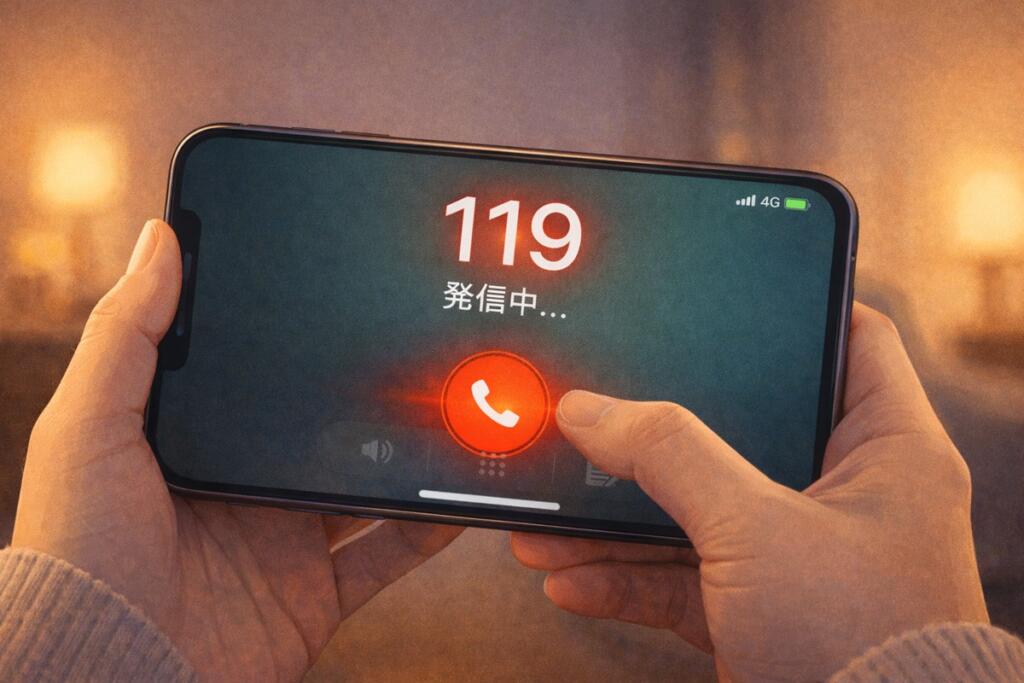
The procedure for calling an ambulance is as follows:
- Call 119
- Indicate that it is an emergency (to distinguish between a fire engine and an ambulance)
- Provide the following information
- Current address
- Symptoms and age of the injured person
- Name and contact information of the reporter
- as needed
- Presence or absence of chronic illnesses
- Medications you are taking
- Family hospital
By providing this information, an ambulance will be dispatched quickly from the nearest fire station.
3. What kind of people ride in an ambulance?
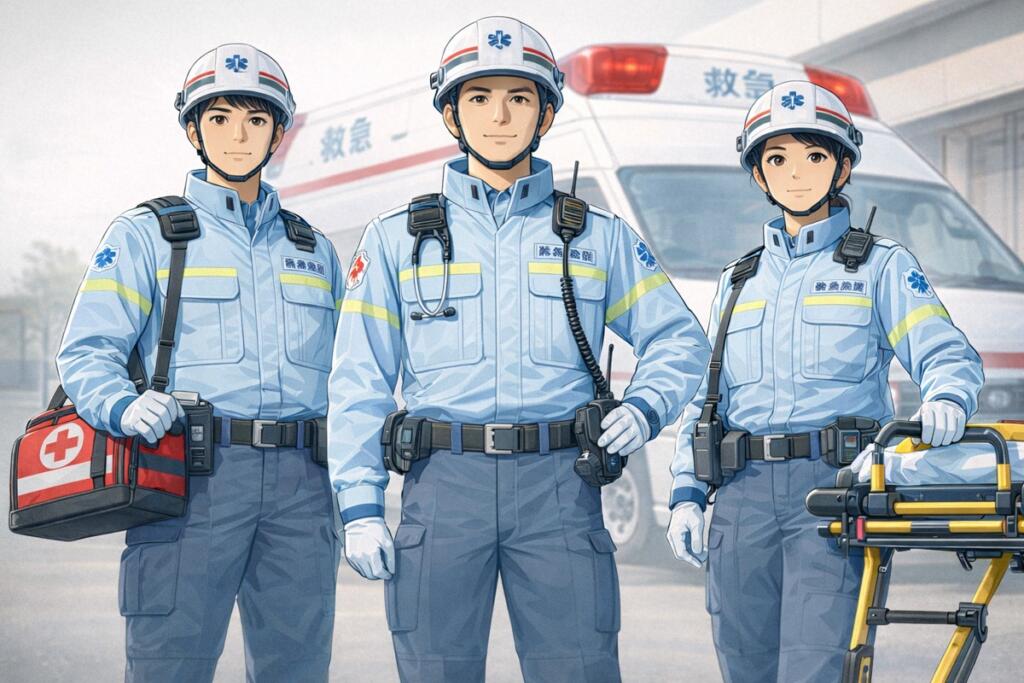
In the ambulance emergency team The ambulance crew is from the fire department. In principle, groups of 3 We will be active in the following areas. When emergency personnel receive a 119 call, they rush to the scene and load the injured person into an ambulance. They administer first aid and transport the person to an appropriate medical institution depending on their condition. Emergency personnel are on standby 24 hours a day and work in extremely tough conditions. Please note that emergency personnel and firefighters belong to the same organization.
What is a paramedic?
The paramedic is Nationally qualified person licensed by the Minister of Health, Labour and Welfare You can then provide emergency medical treatment under the direction of a doctor. During the limited time before arrival at the hospital, they play an important role in preventing the condition from worsening and saving lives.
Many paramedics work for fire departments.
- Self-Defense Forces
- Japan Coast Guard
- police
- hospital
- Private ambulance company
He is active in a wide range of fields, including:
4. How often are ambulances dispatched?
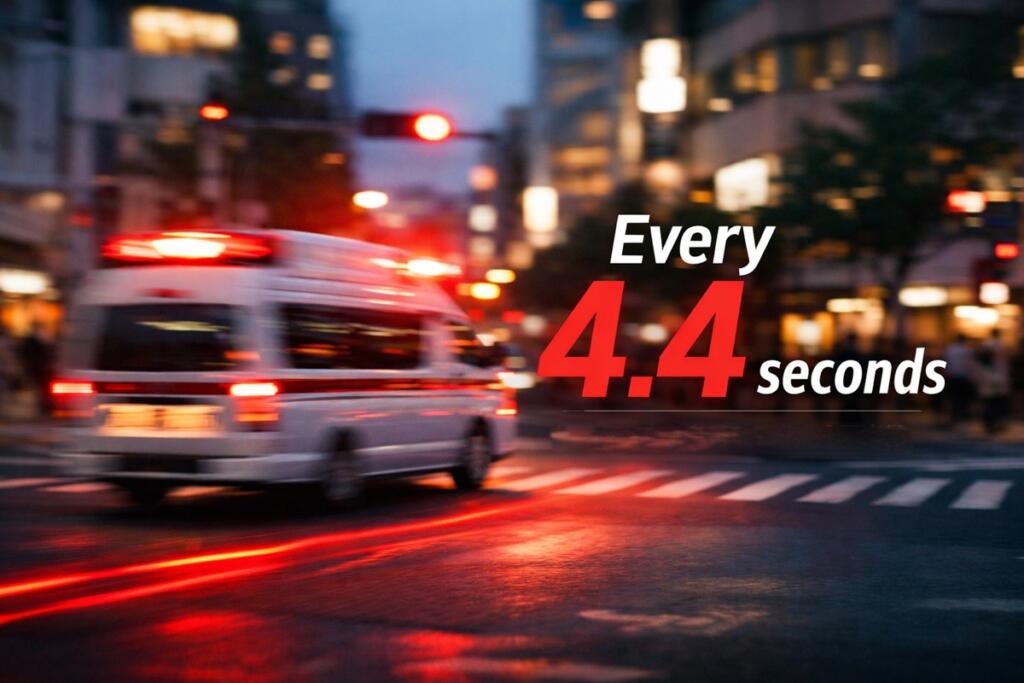
Japanese ambulances Approximately once every 4.4 seconds They are deployed at a very high frequency.
In fiscal year 2022,
- Number of emergency dispatches: 7,229,572 items
- Personnel transported: 6,217,283 people
This shows that the burden on emergency care facilities is increasing year by year.
5. Breakdown of symptoms of people transported to hospital by ambulance
The percentage of patients transported by symptoms in fiscal year 2022 is as follows:
- Mild: 47.3%
- Moderate symptoms: 43.5%
- Severe: 7.7%
- Mortality: 1.5%
Including the seriously injured and the deadLess than 10%This suggests that in reality, there are many cases that are not highly urgent.
6. Why ambulance fees are being discussed
Currently, there is a debate in Japan about charging for ambulances. Increasing operational costs The total cost of emergency activities in fiscal year 2022 was: Approximately 325.35 billion yen The burden is expected to increase further in the future due to the aging population and increasing medical needs.
7. Avoiding ambulance fees
The most important thing to do to avoid paying is to Only those who really need it can use it If ambulances continue to be used carelessly for minor or less urgent cases, Japan’s proud ambulance system itself may not be able to be maintained.
summary
Japan’s ambulance service is free nationwide, which is extremely rare even when viewed globally. However, behind this lies a huge cost and burden on the field. In order to preserve this wonderful system for the future, we must not only rely on the system, but also Morality and correct understanding for each of us It is essential to remember that ambulances are the “last lifeline.”


▲Ministry of Health, Labour and Welfare website
lives even a little. I look forward to your opinions and feedback. I hope you will check out other content on Instagram and YouTube.
See you again…

▲ I will continue to post more like this in the future. Thank you for your support.

Reactions from people in various countries‼︎















Comment